One of the things I love most about cocktails is that sometimes a drink comes together not from a plan, but from circumstance, curiosity, and the right friends standing around the counter at the right moment.
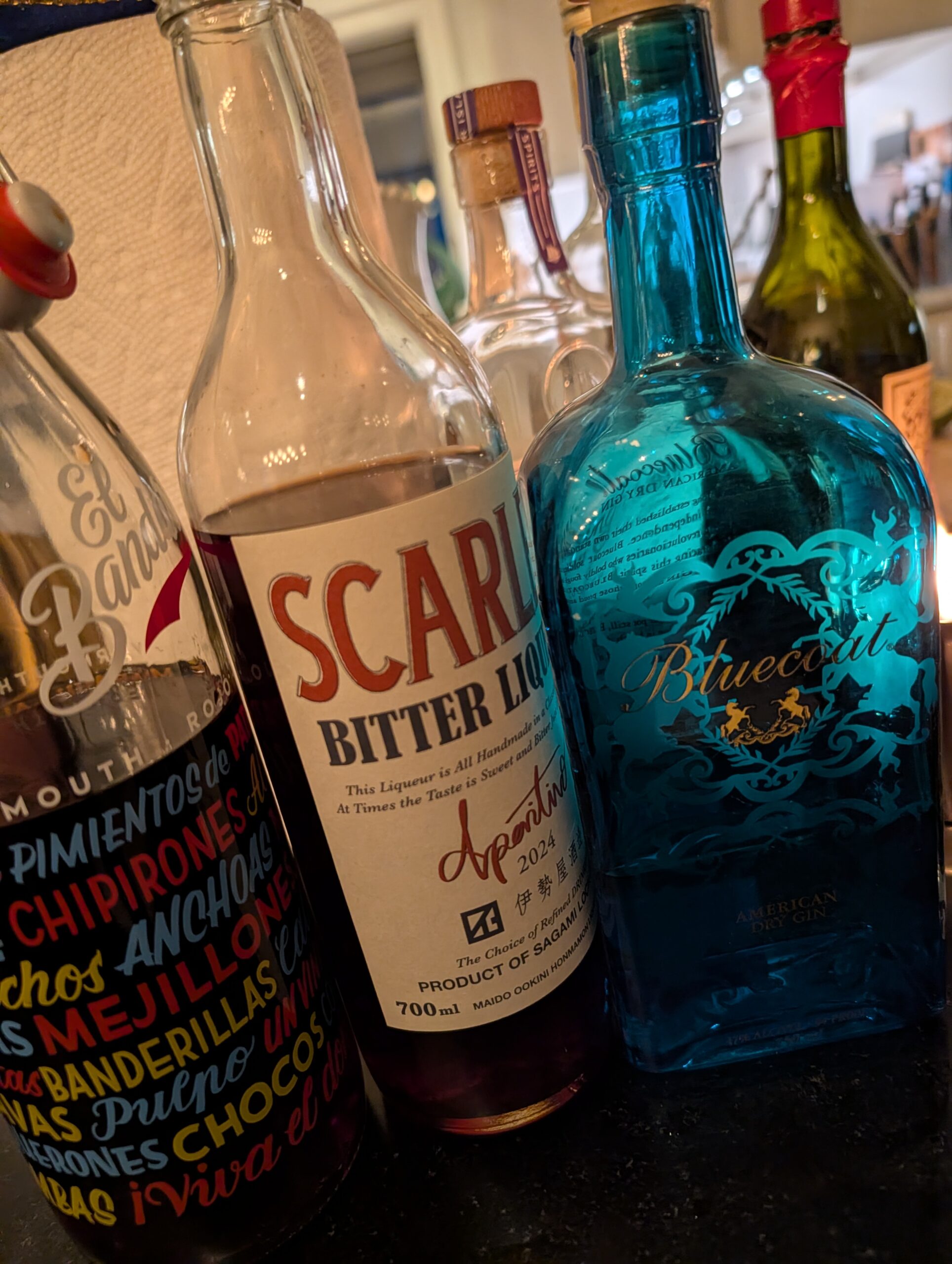
That happened recently at a dinner with friends here in Garrison, NY. I arrived carrying two new finds from Suburban Wines in Yorktown Heights: Scarlet Bitter Liqueur Aperitivo 2024, a Japanese bitter aperitivo made by Tatsuya “Moto” Motonaga at Iseya Distillery in Sagamihara, and El Bandarra Vermut Rojo, a lively Spanish red vermouth from Catalunya, Spain.
Our host, a fellow Negroni enthusiast, a Negroni-ite, which I think ought to be a word, had a bottle of Bluecoat American Dry Gin on hand, a gin I had not had in years but still like very much. Once those three bottles were lined up together, it felt less like a decision and more like fate. Or at least very good cocktail luck.
This was one of those spontaneous cocktail moments. No jigger. No notebook. Just a large ice cube in a rocks glass, a little of this, a little of that, a stir, a taste, another tiny adjustment, and suddenly there it was. Eyeballed, intuitive, and exactly right. The sort of thing Sam Stilton, NY Times food writer famous for his no-recipe cookbooks, would do.
The Scarlet was what made me sit up straight. It takes inspiration from classic bitter aperitivo, but it has its own unique flavor. It is made with locally sourced botanicals, with notes including citrus peel, jasmine, sage, licorice, cinnamon, and other herbs and roots. The effect is bittersweet, citrusy, herbal, and quietly complex, with a bitterness that feels refined rather than blunt.
The El Bandarra Vermut Rojo brought the other half of the conversation. It has lively richness, spice, a little sweetness, and that deeply useful herbal warmth that makes good vermouth such a beautiful partner in drinks like this.
Bluecoat is a bright, citrusy American dry gin with enough juniper to hold its shape, but a lighter, fresher feel than some more old-school London dry styles. It brings energy, lift, and a clean finish, which made it an excellent partner for the Spanish vermouth and Japanese bitter aperitivo.
Then came a few dashes of interesting bitters my friend had on hand, and the whole thing snapped into focus.
So, was it a Negroni? I would say yes, in spirit, though not in the strict view held by some that it must be made with Campari and Italian vermouth. This one honored that structure while cheerfully ignoring the borders. Which, frankly, is part of the enduring charm of the Negroni. It is both a formula and an invitation.
What emerged in the glass was beautifully balanced: bright gin, rich vermouth, elegant bitterness, a little citrus, a little spice, and just enough mystery to make you want another sip before you have fully finished the first.
No official recipe yet. This one was made the right way for that kind of evening: in a rock glass, over one large cube, measured by eye, adjusted by taste, and shared among friends.